
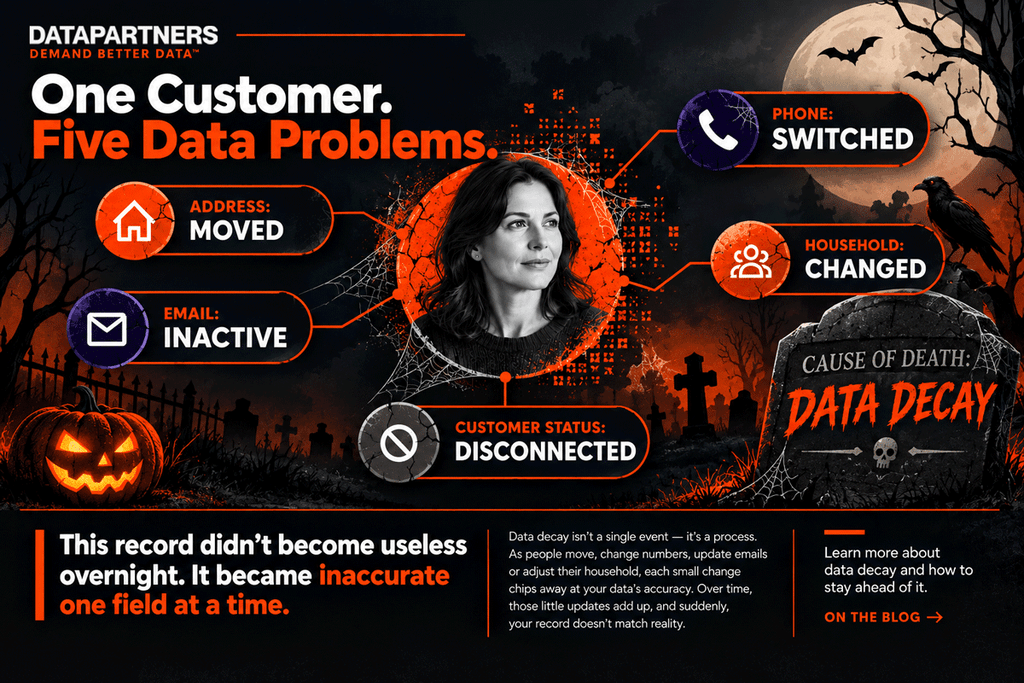
A customer record doesn’t suddenly become bad data.
It happens one change at a time.
The customer moves. The phone number changes. The email address goes inactive. The household changes. Eventually, the customer disconnects.
Any one of those changes might seem minor. The problem is what happens when they start adding up.
Data doesn’t sit still
Your customers don’t stay in the same house, keep the same phone number, or maintain the same household forever. Their lives change, and the data associated with them changes with it.
The address that was accurate six months ago may now belong to someone else. A phone number may have been disconnected, reassigned, or replaced with a wireless number. An email address that once delivered perfectly may now bounce every time.
Even household information can become outdated. People move in and out. Marriages happen. Children grow up and leave. Roommates come and go.
Meanwhile, the customer’s status can change entirely.
The result is a record that may still look complete in your database, but no longer tells you much about the customer as they exist today.
Small changes create a bigger problem
This is what makes data decay easy to miss.
There usually isn’t a moment when someone can point to a record and say, There. That’s when it became bad.
Instead, the record gets a little less accurate with every change.
One field is wrong. Then another. Then another.
Eventually, you may be marketing to the wrong address, calling a number that no longer belongs to the customer, sending email to an inactive account, or treating a disconnected customer as if they were still active.
The record didn’t become useless overnight. It became inaccurate one field at a time.
Cleanup isn’t the same as keeping up
A large data cleanup can fix what’s wrong today. It doesn’t prevent the same problems from developing tomorrow.
That distinction matters.
Data quality is not a project you finish and check off the list. It’s an ongoing process of identifying what has changed, validating what is still accurate, and filling in what is missing.
The goal isn’t to make your database look clean.
The goal is to make sure the data still reflects the people and households behind the records.
Better data starts with reality
The more current your data is, the more useful it becomes.
That means identifying changes before they turn into wasted outreach. Updating contact information. Removing records that no longer belong in a campaign. Recognizing household and customer-status changes. Filling gaps when the information you have is no longer enough.
Because a customer record is only valuable when it represents the customer you’re actually trying to reach.
Data changes. Your database should, too.