
Our Blogs
-
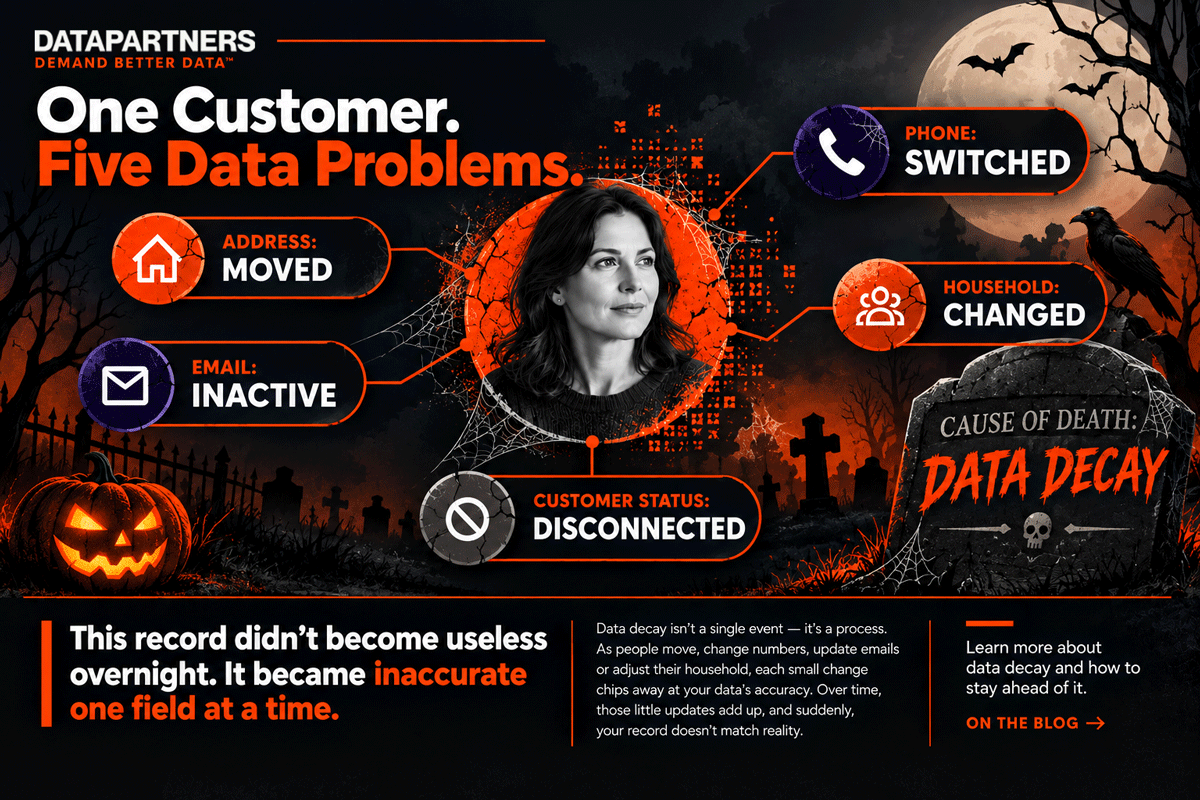
One Customer. Five Data Problems.
READ MOREA customer record doesn’t become bad data overnight. Addresses change, phone numbers get switched, emails go inactive, and households evolve. See how small changes add up to data decay and why keeping your data current…
-

Your Biggest Opportunity is Where You’re Not Targeting
READ MOREMost marketing teams are stuck in refinement mode — optimizing creative, tweaking personas, and competing harder for the same audiences everyone else is chasing. Exploration changes the game. When you treat your data like a…
-

The Marketing Problem Everyone Has But Nobody Talks About
READ MOREMost marketing campaigns aren’t failing because of creative or budget — they’re failing because the data behind them is broken. Duplicate records, outdated info, and missing identities quietly drain performance and waste spend. Fix the…
RECENT POSTS
Experian Marketing Services vs Acxiom vs DataPartners: Comparing Marketing Data Approaches
October 5, 2026
Marketing teams evaluating data providers face a fundamental decision: invest in enterprise platforms that require significant internal resources to operate, or partner with a consultative data provider that delivers campaign-ready audiences built around specific business objectives. Understanding these different approaches helps marketers select the partner that matches their campaign needs and operational realities. Key Takeaways
Melissa vs Welcome Wagon vs DataPartners: Comparing Mover Data Solutions
October 5, 2026
Marketing teams evaluating data providers for mover campaigns face a critical decision: choose a self-service address verification tool, a turnkey mover-marketing program, or a consultative partner that delivers custom, campaign-ready data. While Melissa Data offers address verification across 250+ countries and territories and Welcome Wagon provides managed marketing services for new movers, DataPartners delivers campaign-ready
Best Identity Resolution Services for Multi-Location Businesses in 2026
October 5, 2026
Multi-location businesses face a data problem that single-site companies rarely encounter: the same customer can appear as three different people across stores. Someone who browses online, buys at a downtown location, and returns an item at a suburban store creates fragmented records that make personalization nearly impossible and waste marketing spend on duplicate outreach. The