
Our Blogs
-
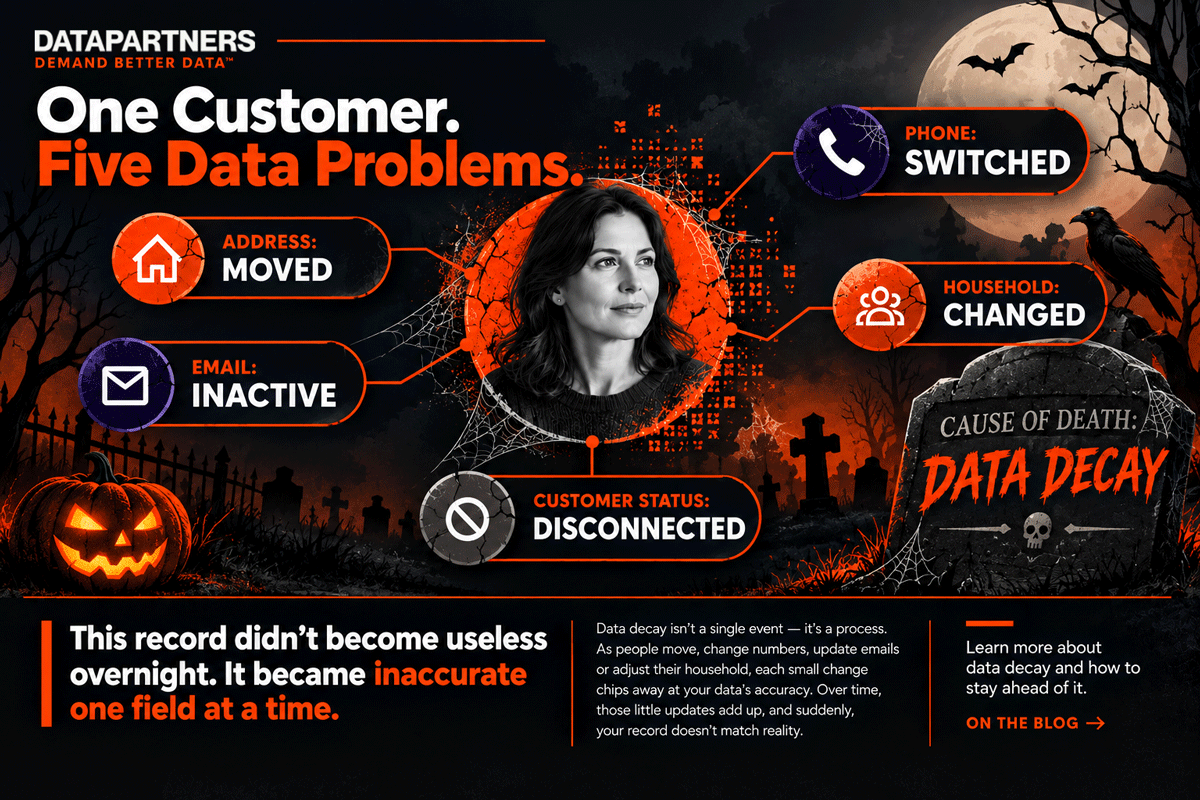
One Customer. Five Data Problems.
READ MOREA customer record doesn’t become bad data overnight. Addresses change, phone numbers get switched, emails go inactive, and households evolve. See how small changes add up to data decay and why keeping your data current…
-

Your Biggest Opportunity is Where You’re Not Targeting
READ MOREMost marketing teams are stuck in refinement mode — optimizing creative, tweaking personas, and competing harder for the same audiences everyone else is chasing. Exploration changes the game. When you treat your data like a…
-

The Marketing Problem Everyone Has But Nobody Talks About
READ MOREMost marketing campaigns aren’t failing because of creative or budget — they’re failing because the data behind them is broken. Duplicate records, outdated info, and missing identities quietly drain performance and waste spend. Fix the…
RECENT POSTS
27 Marketing Data Decay Statistics That Prove Why Fresh Data Wins
July 7, 2026
Critical data showing how outdated contact information destroys campaign ROI and what marketers can do to fight back Marketing data decay is silently draining budgets, killing campaign performance, and wasting sales team hours across every industry. When B2B contact data can decay as fast as 70.3% in high-change environments, and even conservative benchmarks show steady
30 Email Deliverability Statistics Every Marketer Should Know in 2026
July 7, 2026
Data-driven insights revealing why inbox placement depends on list quality, sender reputation, and campaign-ready audience data Email marketing remains one of the highest-ROI channels available to marketers, but success hinges on one critical factor: actually reaching the inbox. The global inbox placement average hovers around 84%, meaning roughly one in six emails never reaches its
32 Direct Mail Response Rate Statistics That Prove Why Data Quality Matters
July 7, 2026
Comprehensive analysis of direct mail performance benchmarks, industry trends, and the critical role of campaign-ready data in driving higher response rates Direct mail continues to outperform digital channels, delivering a 4.4% average response rate compared to email’s 0.12%. Yet the difference between average and exceptional results often comes down to one factor: data quality. Marketers