
Our Blogs
-
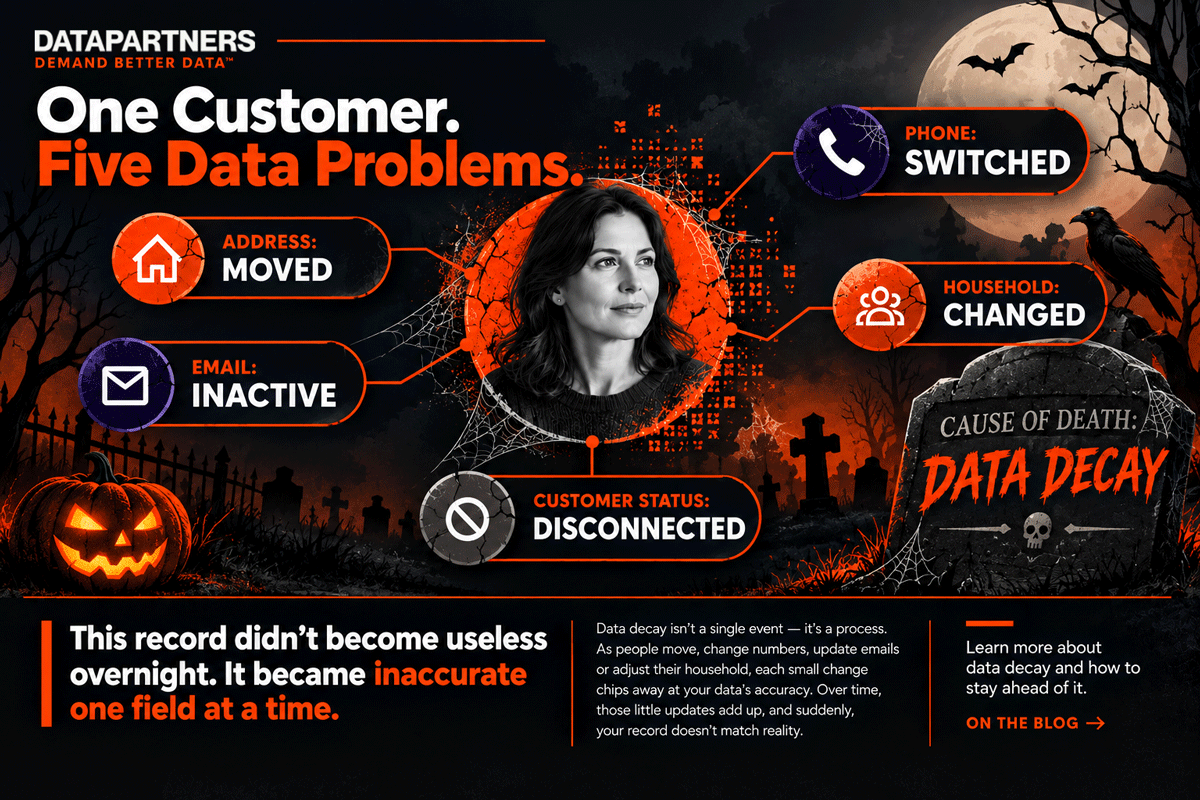
One Customer. Five Data Problems.
READ MOREA customer record doesn’t become bad data overnight. Addresses change, phone numbers get switched, emails go inactive, and households evolve. See how small changes add up to data decay and why keeping your data current…
-

Your Biggest Opportunity is Where You’re Not Targeting
READ MOREMost marketing teams are stuck in refinement mode — optimizing creative, tweaking personas, and competing harder for the same audiences everyone else is chasing. Exploration changes the game. When you treat your data like a…
-

The Marketing Problem Everyone Has But Nobody Talks About
READ MOREMost marketing campaigns aren’t failing because of creative or budget — they’re failing because the data behind them is broken. Duplicate records, outdated info, and missing identities quietly drain performance and waste spend. Fix the…
RECENT POSTS
Engaging Elusive Decision Makers with Better Data
July 9, 2025
Not all customer prospects are created equal. Within the piled hay of customer data lies the shiny needles — the elusive decision markets — that marketers seek. This article explores how to refine data haystacks using optimized, firmographic information to find the true prizes.
Landing Enterprise-Level Clients with Data
June 25, 2025
Is there anything more frustrating for marketers targeting enterprise-level companies than unwittingly wasting their precious time on small organizations? How can better data allow easier targeting of the right companies and (even better) the right executive decision-makers in those companies?
Data Sourcing Problems? Triangulate and Triumph!
June 11, 2025
Just like there’s more than one perspective in an argument, there’s more than one source of truth in a data-driven analysis. This article explores the benefits of triangulated data, a multi-perspective approach to data sourcing that allows for greater reliability, depth, and context of decision-making.